





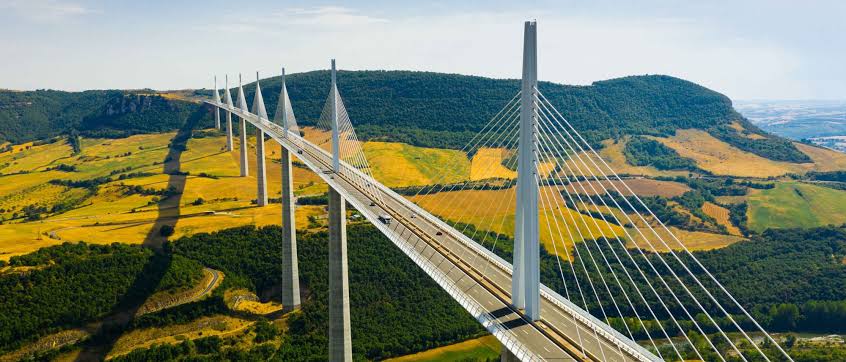
The Millau Viaduct, a marvel of modern engineering, stands as one of the tallest bridges in the world and a symbol of French innovation. Spanning the Tarn River valley in southern France, this impressive structure dramatically reduces travel time between Paris and the Mediterranean coast, while showcasing cutting-edge design and construction techniques. Its creation involved meticulous planning, advanced engineering, and international collaboration, making it a case study in large-scale infrastructure projects.
The concept for the Millau Viaduct arose from the need to alleviate severe traffic congestion on the existing route through the Tarn valley. This mountainous area presented significant challenges, requiring a bridge that could How the Millau Viaduct Became One of the Tallest Bridges on Earth maintain a smooth and efficient path for vehicles without disrupting the natural landscape. The solution was to build a cable-stayed bridge that soars high above the valley floor, allowing uninterrupted passage beneath and preserving the environment below.
Designed by the renowned British architect Norman Foster and French structural engineer Michel Virlogeux, the Millau Viaduct combines aesthetic elegance with structural ingenuity. The bridge stretches approximately 2.5 kilometers (1.55 miles) and features seven slender, towering pylons that support a roadway deck. The tallest pylon reaches an astonishing height of 343 meters (1,125 feet), making it taller than the Eiffel Tower. This height was necessary to clear the deep valley and ensure stability against strong winds and seismic activity.
Construction began in 2001 and took just over three years to complete, a remarkable achievement given the bridge’s complexity. Engineers used innovative techniques such as launching the deck from both sides of the valley simultaneously, using special cranes and temporary supports. This method minimized environmental impact and allowed work to progress safely at great heights. The deck segments were precisely aligned and connected using high-strength cables, ensuring durability and flexibility.
The Millau Viaduct was officially opened to traffic in December 2004 and quickly became a vital transportation link in France’s highway network. Beyond its practical benefits, the bridge has attracted tourists and engineering enthusiasts worldwide, celebrated for its sleek design and the seamless integration of technology and nature. It stands as a testament to what can be achieved when vision, expertise, and determination converge.
Today, the Millau Viaduct continues to inspire engineers and architects globally, demonstrating how infrastructure can be both functional and beautiful. Its success underscores the importance of innovation in overcoming geographical challenges and improving connectivity. As one of the tallest and most elegant bridges in the world, the Millau Viaduct remains a proud achievement of French engineering and a landmark of modern construction excellence.