





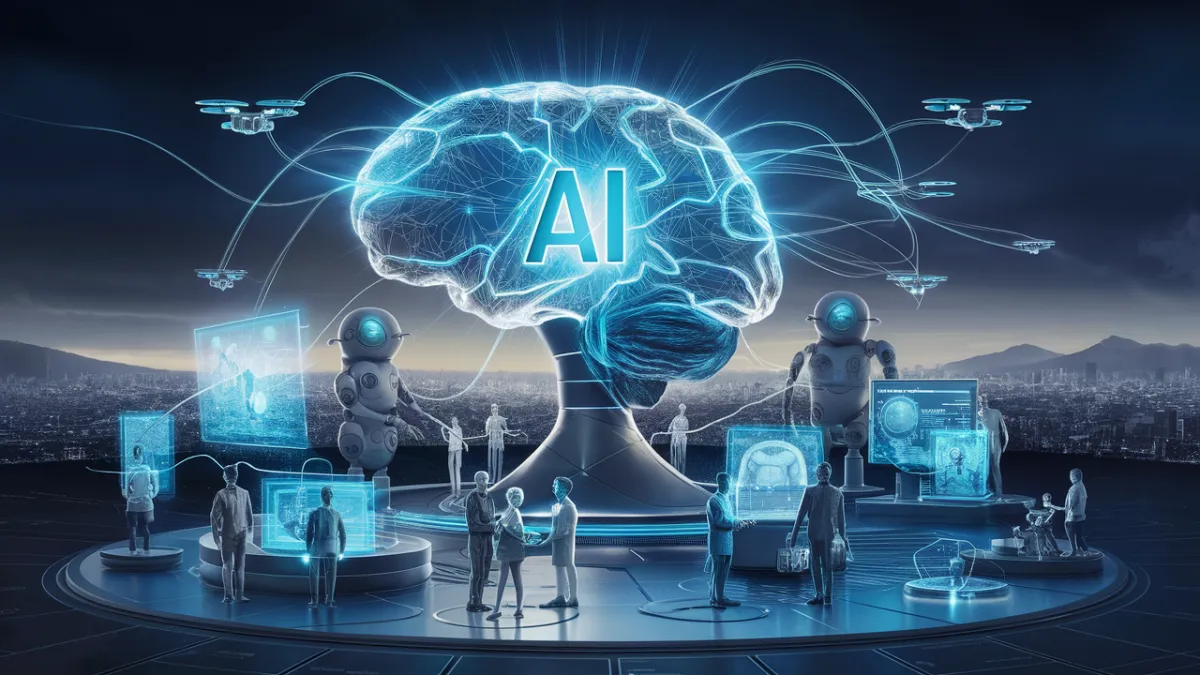
Artificial intelligence (AI) has increasingly become a transformative force across various industries, and product development is no exception. By integrating AI into the product development process, companies can significantly enhance efficiency, innovation, and decision-making capabilities. This integration helps reduce time-to-market, optimize resource allocation, and improve overall product quality.
One of the primary ways AI improves product development is through data-driven insights. Traditional product development often relies on intuition or limited datasets; however, AI can analyze vast amounts of data from customer feedback, market trends, and competitor products to identify unmet needs and emerging opportunities. This enables teams to make informed decisions about feature prioritization or design changes that better align with consumer preferences.
Moreover, AI-powered tools facilitate rapid prototyping by automating repetitive tasks such as 3D modeling or simulation testing. Machine learning algorithms can predict how different materials or components will behave under various conditions without requiring physical prototypes at every stage. This not only accelerates iteration cycles but also reduces costs associated with trial-and-error experimentation.
Collaboration among cross-functional teams also benefits from AI integration. Natural language processing (NLP) technologies help in summarizing meeting notes, extracting key action points from discussions, and even generating documentation automatically. These capabilities ensure that communication gaps are minimized and all stakeholders remain aligned throughout the development lifecycle.
Another significant advantage lies in predictive analytics for risk management. AI models can forecast potential bottlenecks related to supply chain disruptions or manufacturing defects based on historical data patterns. Anticipating these challenges early allows companies to implement contingency plans proactively rather than reacting after problems arise.
In addition to improving internal processes, AI enhances user experience testing by simulating real-world scenarios through virtual environments powered by reinforcement learning algorithms. Developers gain deeper insights into how customers might interact with new features before launch-enabling fine-tuning that increases satisfaction post-release.
Furthermore, personalization driven by AI enables products tailored more precisely to individual user needs rather than a one-size-fits-all approach. By analyzing behavioral data continuously collected during beta testing phases or pilot programs, developers can adapt functionalities dynamically for different segments of their target audience.
While adopting AI in product development presents clear advantages, it also requires thoughtful implementation strategies including proper training for team members and ethical considerations around data privacy. Nonetheless, when integrated effectively within workflows, Artificial Intelligence stands as a powerful catalyst for innovation-transforming traditional methods into smarter systems capable of delivering superior products faster while reducing risks associated with uncertainty inherent in new developments.
In conclusion, embracing AI technologies throughout the product development cycle offers organizations an unparalleled opportunity to streamline operations-from ideation through launch-and create value both internally for teams and externally for customers alike. As tools continue evolving rapidly alongside advances in machine learning techniques and computational power availability worldwide; companies leveraging these innovations will likely maintain competitive advantages well into the future landscape of global markets where speed combined with quality defines success metrics most critically today.
