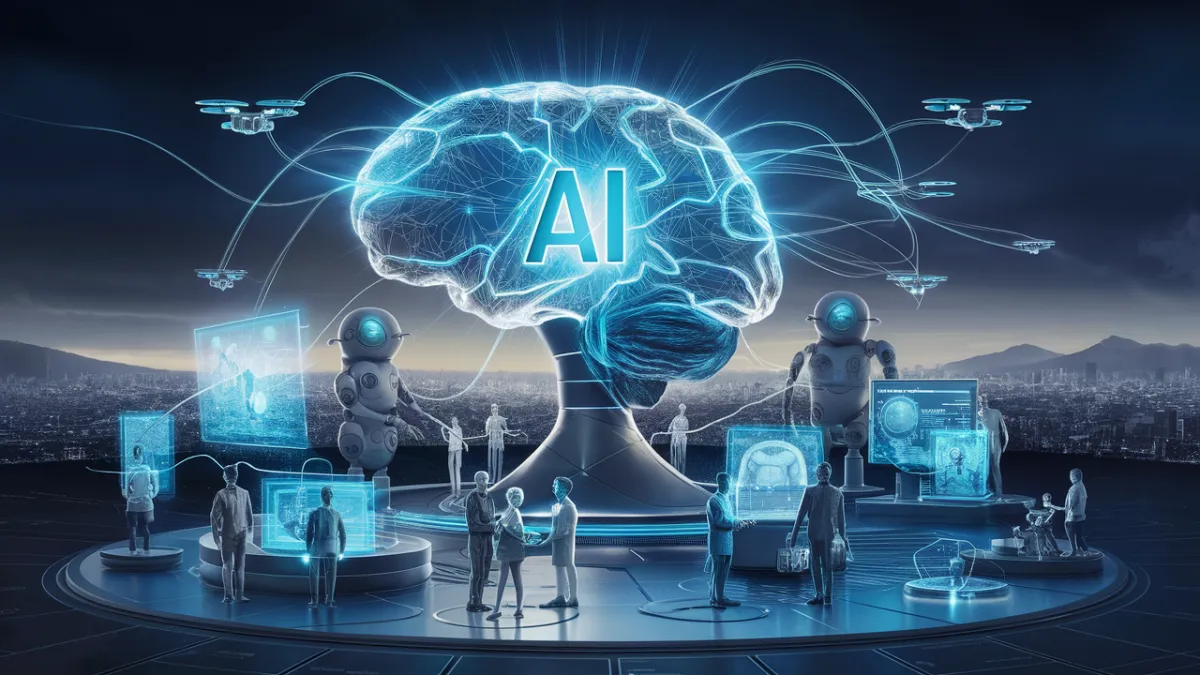






In today’s rapidly evolving marketplace, artificial intelligence (AI) has emerged as a transformative force in business development, offering companies a strategic advantage that can significantly enhance growth and competitiveness. The integration of AI technologies into business processes enables organizations to make more informed decisions, optimize operations, and create personalized customer experiences that drive engagement and loyalty.
One of the primary ways AI contributes to business development is through data analysis. Businesses generate enormous volumes of data daily, from customer interactions to market trends. AI-powered analytics tools can process this vast amount of information quickly and accurately, uncovering patterns and insights that might be invisible to human analysts. These insights empower businesses to identify new opportunities for growth, anticipate market shifts, and tailor their strategies accordingly. For example, predictive analytics can forecast customer behavior or sales trends with high precision, allowing companies to allocate resources more effectively.
Moreover, AI enhances lead generation and customer relationship management by automating repetitive tasks such as sorting through potential leads or responding to common inquiries via chatbots. This automation not only increases efficiency but also allows sales teams to focus on nurturing high-value prospects rather than getting bogged down in administrative work. Additionally, AI-driven personalization engines analyze individual customer preferences and behaviors in real-time, enabling businesses to deliver highly targeted marketing campaigns that resonate with specific audiences. This level of customization improves conversion rates while fostering stronger brand loyalty.
Another strategic advantage offered by AI lies in its ability to streamline internal operations through intelligent automation. From supply chain management to financial forecasting, AI systems improve accuracy and reduce human error by handling complex calculations and routine workflows autonomously. This operational efficiency translates into cost savings and faster turnaround times for product development or service delivery-critical factors for maintaining competitive edge.
Furthermore, embracing AI fosters innovation within organizations by facilitating experimentation with new business models or products based on data-driven insights. Companies willing to invest in advanced machine learning algorithms gain a deeper understanding of consumer needs and emerging technologies’ potential impact on their industry sectors.
However, successfully leveraging AI requires thoughtful implementation aligned with overall business goals rather than adopting technology for its own sake. Organizations must ensure ethical considerations around data privacy are addressed while investing in employee training programs so teams can collaborate effectively with intelligent systems.
In conclusion, Artificial Intelligence represents a powerful tool for business development when strategically integrated into company operations. By harnessing its capabilities-ranging from enhanced data analytics and personalized marketing efforts to operational automation-businesses position themselves for sustained growth amid an increasingly competitive global environment. As the technology continues advancing rapidly, those who embrace AI thoughtfully will enjoy lasting benefits that extend beyond immediate gains toward long-term success.